On This Page
It's late. You flip on the kitchen light, and a brown insect darts under the cabinets. Your first question is simple: what was that? The answer matters more than you might expect. American and German cockroaches can seem similar at first glance, yet they behave differently, hide in different spots, and need different treatment plans. Getting the ID right is the first step toward a lasting fix.
This guide focuses on the American vs German cockroach comparison in plain language. You'll start with a quick answer you can use right away, then look at size, color, and markings side by side. We'll cover where each species lives and hides, the signs of an American cockroach problem versus a German cockroach problem, and why the species changes the treatment approach. From there, we look at cockroaches in New York City apartments and businesses, when to call a professional, and what to do after you identify the roach.
Rye Pest Solutions is a family-owned, MBE-certified NYC company with certified technicians and local expertise. The comparison below sticks to what you can observe yourself, so you can act on facts, not guesswork.
The Quick Answer: Telling Them Apart at a Glance
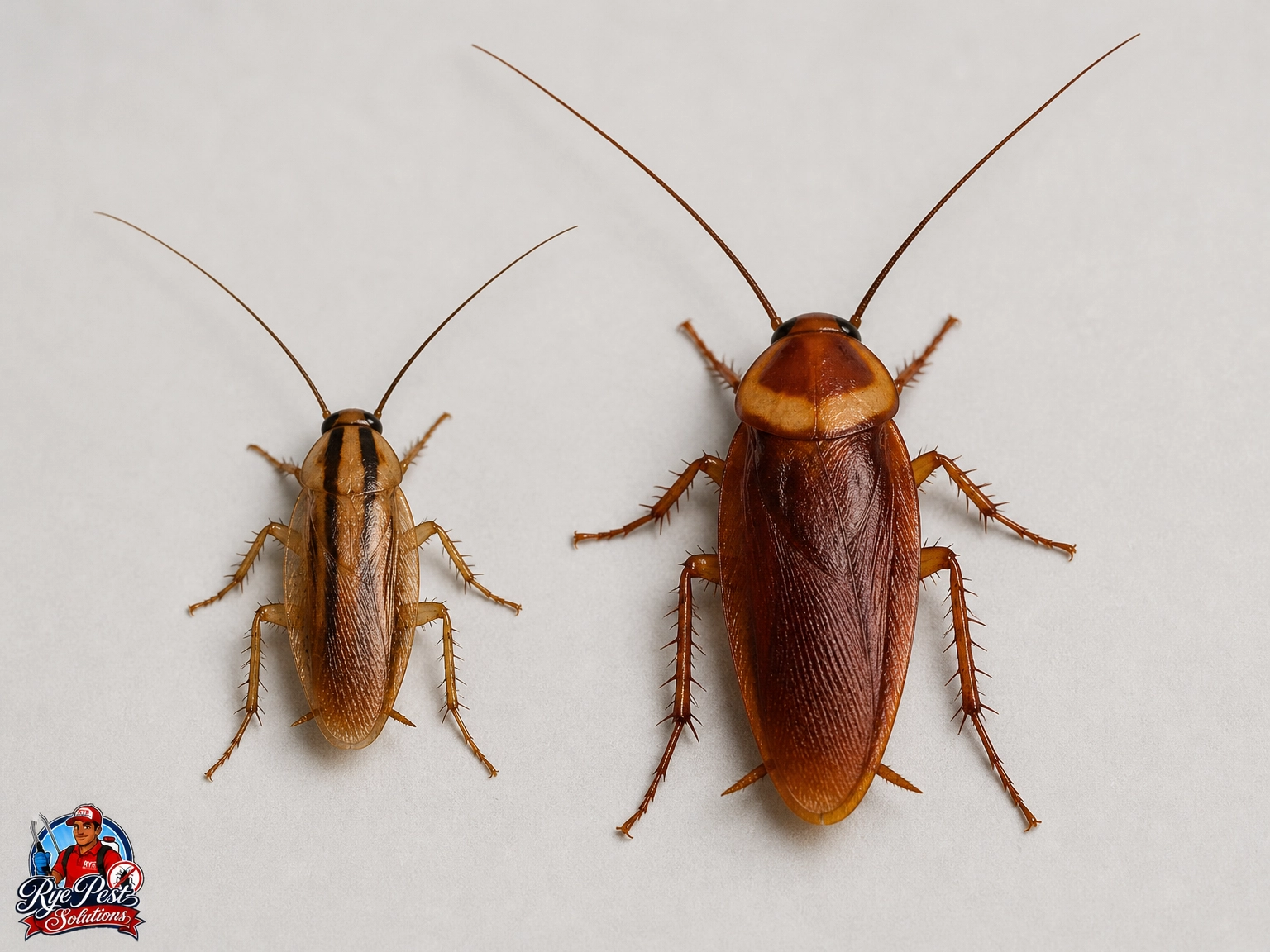
German cockroaches are small, tan, and carry two dark parallel stripes behind the head. American cockroaches are large, reddish-brown, and have a pale, yellowish rim around the shield behind the head.
Feature | German cockroach | American cockroach |
|---|---|---|
Species | Blattella germanica | Periplaneta americana |
Typical length | About 1/2 inch | Roughly 1-1/4 to 2 inches |
Color | Tan to light brown | Reddish-brown |
Distinguishing mark | Two dark parallel stripes behind head | Pale rim on the shield behind head |
Preferred harborage | Kitchen cabinets and nearby crevices | Drains, basements, sewer lines |
Typical NYC setting | Apartment kitchens and bathrooms | Building basements and shared plumbing |
A harborage is simply the tight, warm spot where roaches rest, hide, and breed. You may also come across a nymph, an immature roach, or an ootheca, the purse-shaped egg case.
The practical difference comes down to origin. A single big American roach often wandered in from a drain, basement, or sewer line, while German roaches are usually breeding indoors and rarely travel alone.
If the insect in your jar doesn't match either description, find out whether it is actually a water bug before you worry.
Size, Color, and Markings: Side by Side
With the quick-glance answer in hand, the next step is sorting out the details that separate adults and young roaches. American cockroach adults are the larger of the two, measuring roughly 1-1/4 to 2 inches long, with fully developed reddish-brown wings and a flat, oval body. Their wings cover the abdomen, and the shield behind the head has a pale yellowish rim. German cockroach adults are noticeably smaller and lighter, roughly 1/2 to 5/8 inch long, tan to medium brown, with two dark stripes running lengthwise behind the head. That stripe pair is the clearest field mark.
Young roaches are what many people actually see. Young roaches differ in size and markings, and a hand lens or a close photo helps you compare them with an adult. If the insect is still moving, behavior can help: you may see one larger roach dart across an open floor, while smaller roaches tend to stay pinned to edges and crevices.
At home, skip color alone. Lighting and shadows can make either species look darker or lighter. Instead, place the roach beside a ruler, coin, or credit card for scale, photograph it under bright light, and check whether the wings reach the end of the abdomen. Those details give a professional roach inspection a much clearer starting point.
Where Each Species Lives and Hides
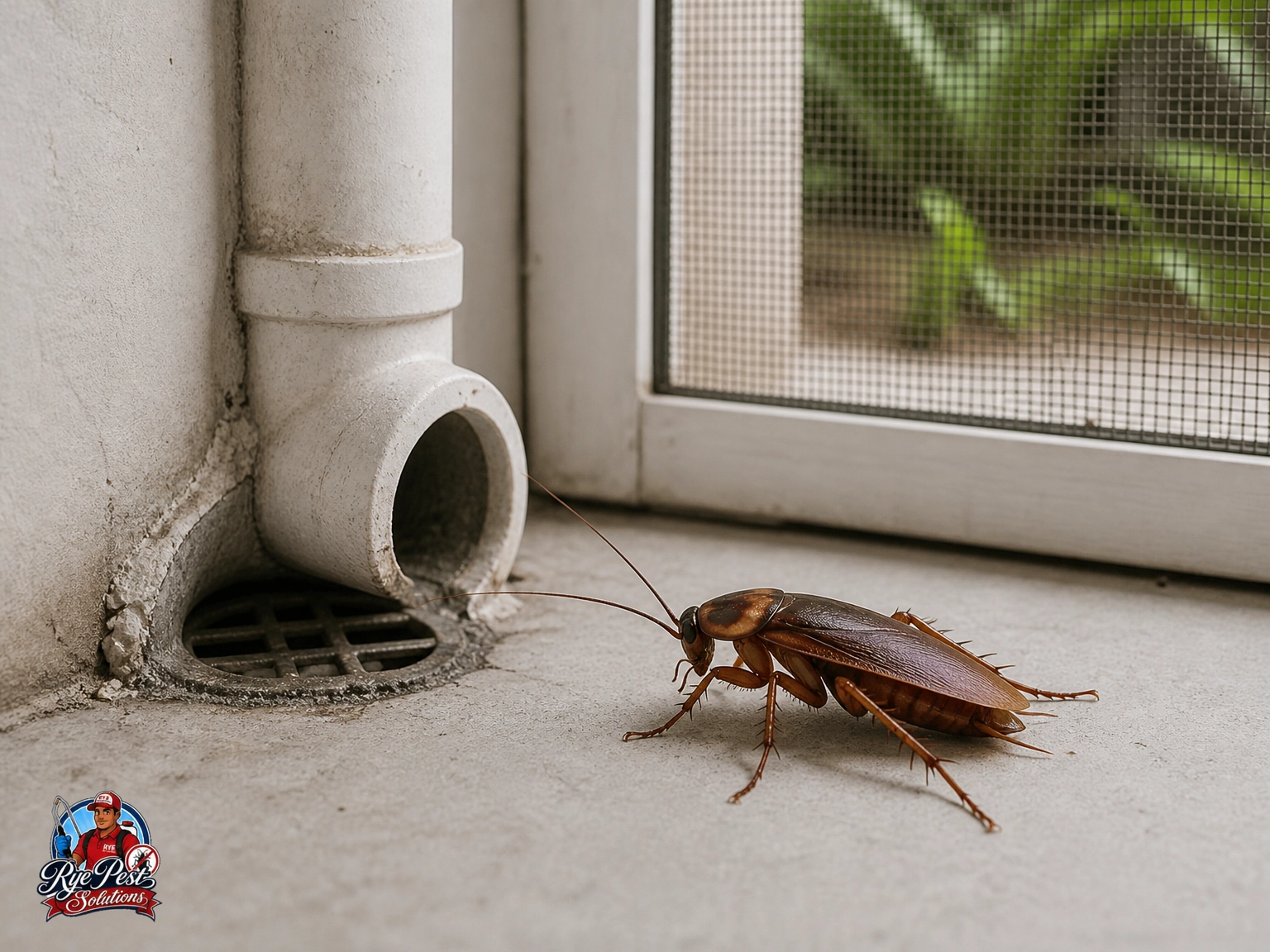
Markings help you name the roach, but location often confirms it. American cockroaches settle in warm, damp, out-of-the-way spots: basements, boiler rooms, floor drains, sewer connections, steam tunnels, and gaps behind appliances in older buildings. They may live outdoors in mild weather, so a sighting in a hallway or bathroom can trace back to a drain rather than a kitchen.
German cockroaches live much closer to people. Check kitchen and bathroom cabinets, drawer tracks, cracks around sinks, behind dishwashers, and inside cardboard boxes or grocery bags carried through the door. They are almost entirely indoor insects and hitchhike between apartments in bags, furniture, and deliveries.
German roaches tend to stay close to food and water, while American roaches often turn up in bathrooms, hallways, or entryways far from any kitchen. Both favor warmth and moisture, which is why NYC steam risers, garbage chutes, and shared plumbing walls can support them. For species-specific habits, see our NYC cockroach guide.
Signs of an American Cockroach Problem
Because American cockroaches often stay near drains and basements, the first clues usually show up there too. You may notice a few large roaches in a basement, bathroom, or hallway. Inspect cabinet backs and baseboards with a flashlight, and compare any droppings you find with what you see in other rooms. Also look for egg cases glued in hidden corners or dropped loose, and for the oily odor this species can leave behind. Sightings often trace back to a shared drain or sewer line or exterior entry point. In a house, inspect outside near drains and foundation gaps; in a large building, ask the owner or manager about plumbing and common-area treatment. Rodents often use the same entry points, so our rodent removal services can help, and this guide on telling mice apart shows why exact ID matters for any pest. If you spot small, striped roaches instead, their signs look very different.
Signs of a German Cockroach Problem
American roaches tend to leave larger clues in basements and drains. German roach signs usually show up much closer to food and water. A German cockroach out during the day is a strong warning. This species tends to stay hidden when people are active, so daytime activity is worth taking seriously.
Look for small droppings near cabinet hinges and drawer tracks, egg cases tucked into tight corners, shed skins, and a greasy residue along cabinet seams. Check the underside of the sink, the space behind the dishwasher, the hinges of upper cabinets, and the folds of paper bags and cardboard.
In apartment buildings, German roaches can move through shared walls, plumbing chases, and electrical conduits, so addressing a single unit often leaves the problem free to return. Those shared gaps can let rodents through too, so our guide to getting rid of mice in NYC covers sealing entry points.
A clean home is no defense. German roaches live on crumbs, moisture, and grease film rather than grime, and they commonly arrive from outside in bags, boxes, or deliveries.
Why the Species Matters for Treatment
Knowing which roach you're dealing with shapes the treatment plan, because each species lives in a different part of the building.
American cockroaches usually come in from outside. Plans for them lean on drain and moisture work, sealing entry points, and correcting plumbing or sewer conditions that keep feeding the population. Treating the roach without fixing the source is like swatting one fly and leaving the window open, and it's the same reason why traps alone fail against mice in older buildings.
German cockroaches are the opposite. They live in kitchen cabinets, behind appliances, and deep in cracks and crevices, so control depends on targeted baiting and precise applications near food and water. In shared properties, that work has to be coordinated across adjacent units and common areas.
Store-bought sprays and foggers rarely solve a German cockroach problem, which is why professional products, formulations, and application methods are restricted to licensed applicators.
Monitoring holds the plan together. Sticky monitors placed in harborage areas show where activity is concentrated and tell you whether treatment is actually working.
Cockroaches in New York City Apartments and Businesses
It also helps to see how New York City itself shapes the problem. The NYC Health Department tracks cockroach data through its online Environment and Health Data Portal, including a cockroach data explorer. That public tool is a useful local reference for understanding how widespread the issue is, though it is not a substitute for an inspection of your building.
In practice, cockroach sightings tend to climb in summer heat and shift indoors as temperatures drop or as buildings stay warm and humid all year. American and German cockroaches both take advantage of those conditions, but in different ways, and shared walls, common basements, garbage areas, and plumbing stacks tie neighboring units together. Check your own kitchen and bathroom for activity, and ask building management how common areas and adjacent units are being handled.
Commercial operators face a similar reality. Restaurants, bodegas, offices, and property managers need documented service programs that keep activity from spreading through a building. That local context is why species identification matters here, and why repeated sightings deserve a closer look from a professional.
When to Call a Professional
If what you are seeing at home matches the multi-unit reality above, here is a simple rule set for knowing when a sighting becomes a service call.
One roach in a week is a sighting. More than one, activity in two rooms, daytime sightings, an egg case tucked in a cabinet corner, or a problem that returns after a store-bought spray all point to a professional inspection. A single German egg case holds 30 to 40 nymphs, so timing matters more than the count.
An assessment is straightforward: a technician identifies the species, finds harborage and entry points, checks moisture and drainage issues that invite roaches, and builds a plan for that property rather than a generic spray.
Rye Pest Solutions is family-owned and MBE-certified, serves all five boroughs plus Westchester County, and has been recognized as Best Pest Control in the Bronx. Certified technicians create customized treatment plans for homes, multi-unit buildings, and commercial spaces.
If that sounds familiar, request a cockroach control inspection and ask about residential pest control and commercial pest management plans. Property owners outside the city can also review our Westchester pest control services.
What to Do After You Identify the Roach
Here is the short version: small and striped points to German, while large and reddish-brown points to American. The species tells you where the roaches came from and how they should be treated, which is why an accurate ID saves time.
Three steps you can take today:
Photograph the roach beside a coin or ruler so the size is clear.
Check the harborage spots covered earlier with a flashlight.
Write down how many sightings you have had and where each one happened.
Skip foggers and random sprays, which rarely fix a German cockroach problem.
Then let Rye Pest Solutions build a property-specific plan, and ask what early warning signs we look for. Our certified technicians serve the Bronx, Brooklyn, Manhattan, Queens, Staten Island, and Westchester County. Schedule an inspection to get started.
Conclusion
Telling American and German cockroaches apart comes down to a few reliable clues: size, color, and markings. Those details also point to different harborage habits and treatment needs, so an accurate ID is more than a curiosity. It helps you understand whether the problem may be isolated or spreading, and it keeps you from reaching for foggers or random sprays that can make German cockroach activity worse. Use the three steps above to document what you see, then bring in a professional for a property-specific plan. Rye Pest Solutions serves the Bronx, Brooklyn, Manhattan, Queens, Staten Island, and Westchester County with certified technicians and customized treatment plans for homes, multi-unit buildings, and commercial spaces. Book an inspection and ask about Rye's residential and commercial treatment plans. A clear identification today can lead to a more comfortable, better-protected property tomorrow.