Bed Bug Treatment in NYC: What Works and What to Expect
On This Page
If a single spray could end bed bugs, New Yorkers would not still be wondering why the bites returned two weeks later. The truth is that professional bed bug treatment in NYC is a process, not a one-time event. Bed bugs feed on human blood, spread through used furniture, luggage, and clothing, and can travel between units along pipes and wiring. HPD calls them increasingly common in New York City and points to prevention, early detection, and rapid treatment as the surest way to limit their spread.
In this guide, we will walk through why one spray rarely ends an infestation, how New York City regulates bed bug treatment, what a professional inspection looks for, and what preparation actually involves. You will also get plain-English explanations of treatment methods, follow-up visits, and how success is verified, along with owner, landlord, and tenant responsibilities in NYC. We will cover how to vet a provider on process rather than promises, what a process-based approach looks like, and what to do next if you have bed bugs in NYC. At Rye Pest Solutions, our family-owned, MBE-certified team believes a thorough, certified approach is the most reliable way to stop bed bugs for good.
Why One Spray Rarely Ends a Bed Bug Infestation
Bed bugs often arrive on used furniture, luggage, or clothing, and they can travel between units along shared pipes and wiring.
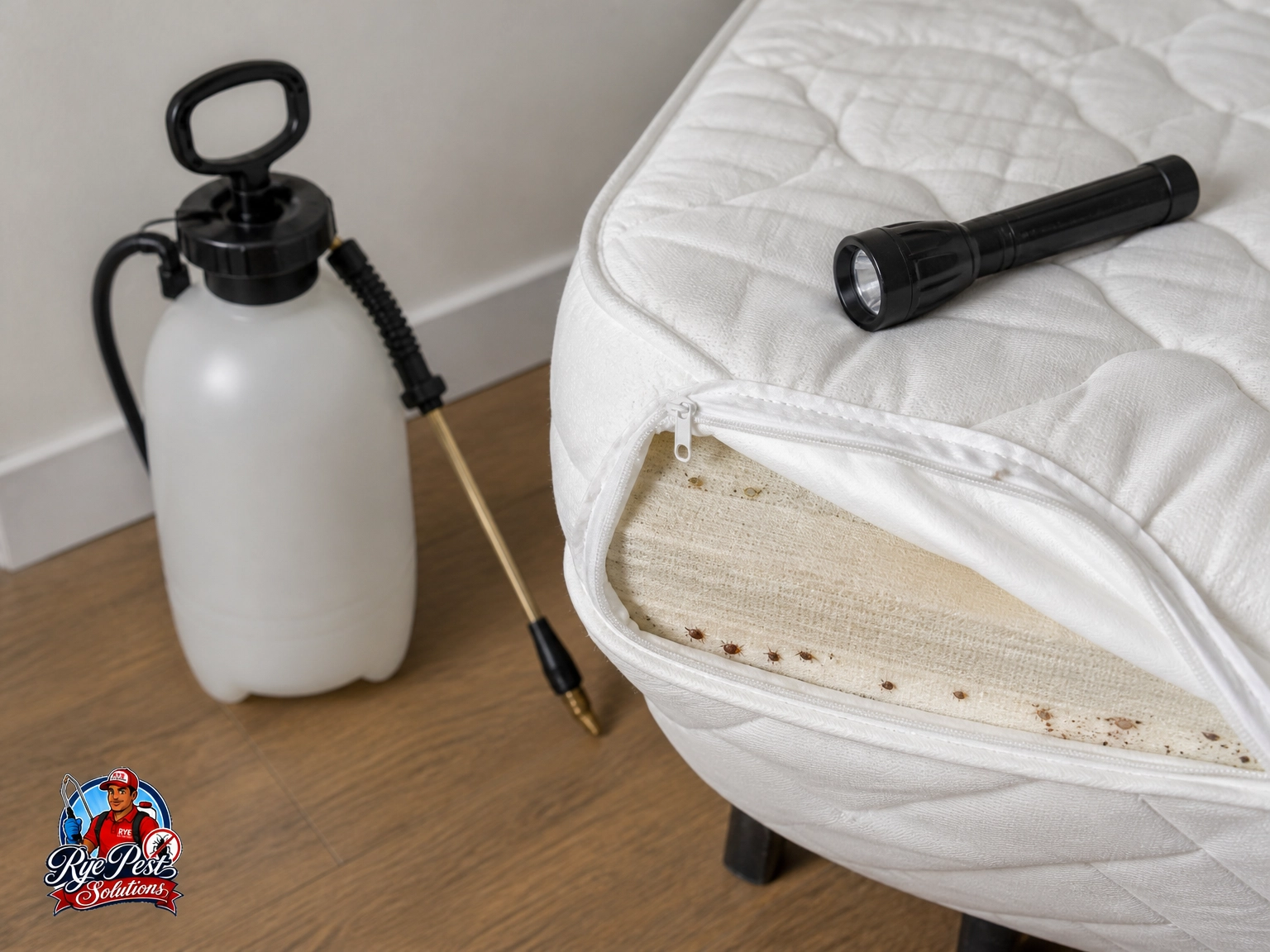
Bed bugs also hide extremely well. They wedge into mattress seams, frame joints, and narrow crevices, so a surface spray reaches only the insects it directly contacts. The EPA notes that bed bug eggs resist many chemical and non-chemical methods, which leaves hidden nymphs behind.
Left alone in a multi-unit building, an infestation rarely stays contained to one apartment.
That is why Tenant Triage NYC's phrase, "a can of spray and an empty promise," fits so many failed attempts. If you are weighing a store-bought fix first, it helps to know what bed bug treatment in the Bronx actually involves before you spend money on one.
Because bed bugs cross rooms, walls, and units, treatment is a process with verification at the end, not a one-time event. Here is what that process looks like.
How New York City Regulates Bed Bug Treatment
NYC rental housing comes with rules that matter when bed bugs show up.
State law requires property owners to hire pest control professionals licensed by the New York State Department of Environmental Conservation (DEC) to treat apartments for bed bugs. HPD expects that professional to inspect, confirm the infestation, and eliminate it.
Local Law 55 of 2018 requires owners of NYC rental housing to use Integrated Pest Management: sealing entry points to keep mice out of NYC homes, removing harborage, and fixing the underlying conditions that support pests. Any pesticide application must be handled by a DEC-licensed professional. Building staff spraying their own product is not legal pest control under IPM, no matter how quickly it happens.
Owners of rental residential buildings must also file a Bed Bug Annual Report and give filing receipts to tenants at lease signing and renewal, or post them prominently in the building.
Enforcement follows inspection. HPD issues a violation when an inspector visually confirms live bed bugs, with 30 days to correct a Class B bed bug violation.
These requirements apply to NYC rental housing. Westchester readers should confirm local obligations separately.
Step One: What a Professional Bed Bug Inspection Looks For
Step one, the inspection, is where a real process begins.
HPD inspectors check mattress edges, headboards, bed frames, sofa crevices, and door frames. A thorough professional inspection works those same spots, then looks beyond them to other likely hiding places. In a Bronx walk-up, a Brooklyn brownstone, or a prewar Manhattan building, a confirmed unit usually means neighboring units get inspected too, since bed bugs travel easily between them.
Activity is confirmed by direct evidence, including live insects and the traces they leave behind. HPD issues a violation only when an inspector visually confirms live bed bugs, so ask whether the provider uses visual inspection, canine detection, or both, and why that method fits your building.
Then ask for it in writing: which rooms and units were checked, where activity was confirmed, and what treatment is recommended. That document separates a process from a promise. If you are still unsure what you are seeing, ask the provider to walk you through the evidence, and you can review our bed bug control services for the full sequence.
What Preparation Actually Involves for You
Once the inspection confirms activity, preparation becomes your job, and it is the part of treatment you control. In plain terms, that means following the prep list your provider gives you so technicians can reach bed frames, baseboards, and closets.
Skip the DIY aisle. Do not apply your own sprays or foggers before treatment, and do not move items between rooms or discard mattresses and furniture without instruction. Doing so can scatter bed bugs into new hiding places and work against the treatment that follows.
Heat, chemical, and combined treatments carry different checklists, so ask for yours in writing before treatment day, including re-entry instructions for people and pets. Landlords and property managers should deliver the list to tenants with enough notice to complete it, and tenants should confirm what is expected of them rather than assume. Keeping the completed checklist on file mirrors what NYC inspectors look for in a pest program.
Prep is not a test. Finishing it correctly is what lets the professional work do its job.
Treatment Methods, Explained in Plain Terms
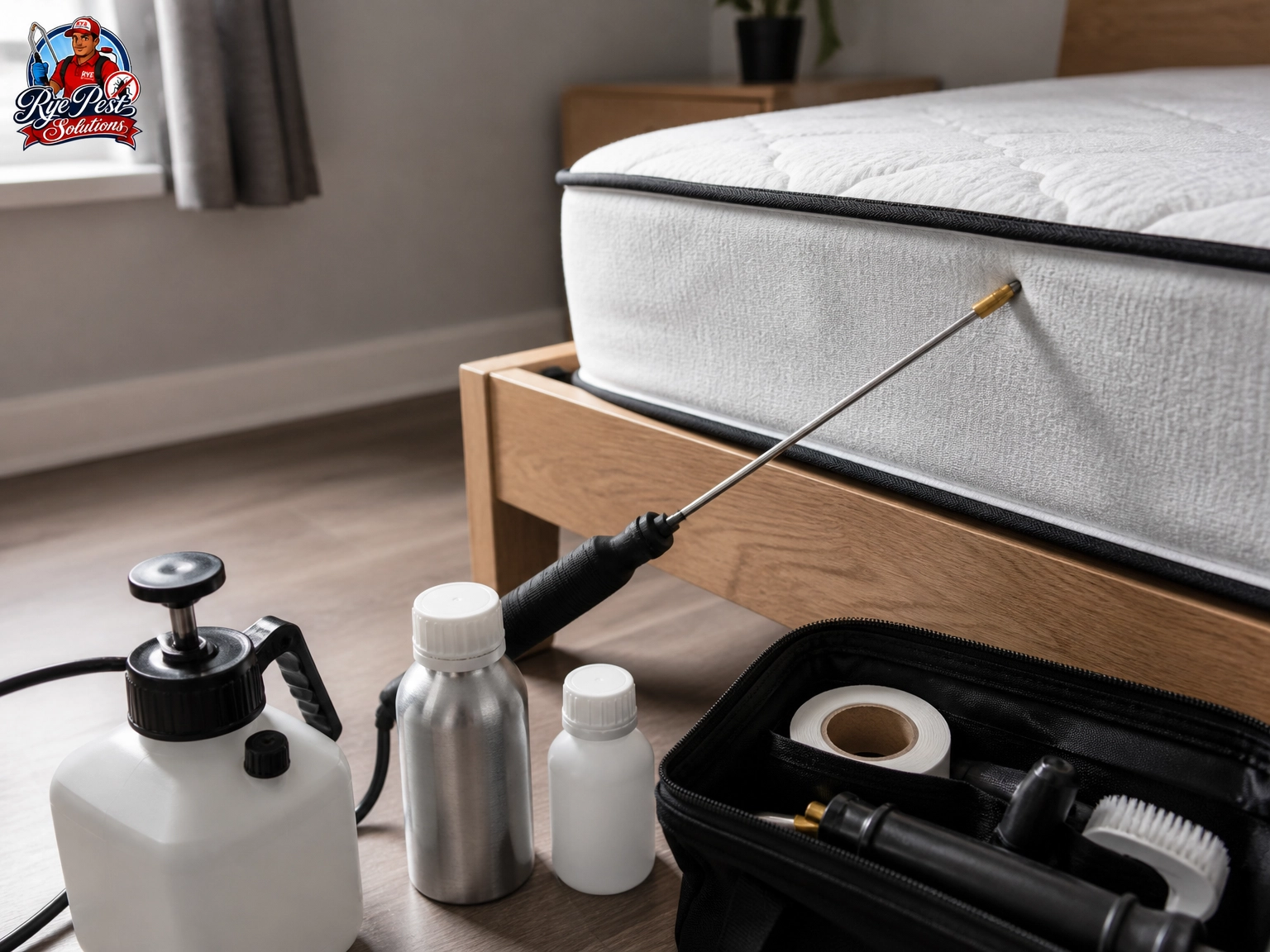
No single treatment fits every New York property. A provider may recommend heat, targeted chemical applications, or a combination, and that recommendation should come straight from what the inspection found, not from a default package.
Ask three questions before work begins: which method is recommended and why, what monitoring or residual protection comes with it, and whether any part of the property will be left untreated. Method details should trace to the Stop Bed Bugs Safely guidance or the provider's own documentation, not to a sales pitch.
Treat "one visit and done" as a warning sign. Eggs and insects tucked into seams and voids mean most infestations call for more than a single service. In NYC rental housing, any chemical application must come from a DEC-licensed professional.
Work should start only after you have a written scope: what gets treated, what does not, and when the follow-up happens. That document is your benchmark for judging the job, whether you manage a rental building or own your home.
Follow-Up Visits and How Success Is Verified
Follow-up is where treatment gets proven, not just promised. HPD expects property owners to make return visits confirming no signs of bed bugs remain, so multiple visits are the normal shape of professional work, not proof it failed.
Before you sign, ask for the revisit schedule in writing: how many visits are included, and how soon does the first return happen? Sources confirm follow-up is expected but do not fix a number, so treat any specific count as a question for the provider, not a given.
Ask the provider what evidence counts as clear before the visit. Success means no live insects and no fresh signs of activity after the monitoring period, not merely fewer bites or a quiet week.
Keep every visit record. Landlords need documentation for HPD violation correction deadlines, and tenants need proof the issue was addressed. Our related blog on confirming an infestation is gone can help you read those results. If other pests show up between visits, our guide on telling water bugs from roaches keeps the next call simple.
Owner, Landlord, and Tenant Responsibilities in NYC
Follow-up verification only works if everyone knows their part, and in NYC those parts are split by law.
Landlords and property managers carry the legal duties: hire a DEC-licensed professional, follow IPM under Local Law 55, file their annual bed bug report each December, and give tenants the receipt at every lease signing and renewal.
HPD's early-detection strategy depends on tenants speaking up rather than waiting to see whether the problem clears on its own.
Homeowners in owner-occupied houses skip the annual filing, but the inspection, treatment, and follow-up sequence still applies. Co-op and condo boards and managing agents should include shared walls and common areas in the scope, since bed bugs cross property lines easily and a partial treatment usually means a repeat visit. That same boundary problem is why mice in pre-war apartments are better solved by sealing gaps than by setting traps.
How to Vet a Provider on Process, Not Promises
Before you sign anything, make the provider prove the process. Ask for their DEC license number, then ask about the training and certification of the technicians who will actually walk your building, not just the company name you heard on the phone.
Then request a written plan: inspection findings, treatment method, prep list, number of visits, and the criteria for calling the infestation resolved. If a provider won't put it in writing, that tells you plenty.
Ask who performs the work, since a trained crew that works in your type of building matters more than a rotating team you cannot name. Local references matter too, so ask for them in your borough, whether you manage a Bronx walk-up, a Brooklyn brownstone, a Manhattan high-rise, or a Westchester single-family home. Our Bronx service area page shows the kind of building mix we handle, and our Brooklyn service area page covers the rest of the borough.
Rye Pest Solutions describes itself as family-owned and MBE-certified, recognized as Best Pest Control in the Bronx for multiple consecutive years, and serving the five boroughs and Westchester County. Those are company claims worth checking alongside the license and references.
What a Process-Based Approach Looks Like in Practice
Once you know what to ask, the pattern is easy to spot. A process-based provider inspects before quoting, treats to a documented plan, and returns to verify results instead of declaring victory after one visit. That is IPM in working form: trained technicians, unit-to-unit inspection, and documented follow-up, the same principles Local Law 55 already requires of NYC landlords.
Communication separates a process from a pitch. You should hear what was found, what will be done, what you need to do, and what happens next, in that order, before treatment day. Tenants and property managers dealing with a Bronx walk-up or a Brooklyn brownstone both want the sequence spelled out.
Rye Pest Solutions is a local, MBE-certified alternative to national franchises, and our technicians stay accountable for the follow-up on the buildings they treat. If your property needs a documented inspection before a treatment plan is drafted, request an inspection with Rye Pest Solutions.
What to Do Next If You Have Bed Bugs in NYC
Here is how to move forward with confidence. Skip the store-bought sprays, and rule out any provider who will not share a license number.
Follow-up verification is part of the service, not an add-on you purchase later, and you should expect more than one visit.
Landlords and property managers should confirm compliance with Local Law 55 and the Bed Bug Annual Report. Tenants should report signs immediately, since HPD points to prevention, early detection, and rapid treatment as the surest way to limit the spread.
If you are in the Bronx, Brooklyn, Manhattan, Queens, Staten Island, or Westchester County, schedule an inspection with Rye Pest Solutions. We will walk your building, explain what we find, and build a treatment plan around it.
Conclusion
Ending bed bugs in NYC takes a process, not a single spray. A licensed professional should inspect first, document what was found, and build a plan around your unit. From there, the work continues through preparation, treatment, and a follow-up visit that confirms the result. If you are ready to start that process, the next step is an inspection.
If you are in the Bronx, Brooklyn, Manhattan, Queens, Staten Island, or Westchester County, request an inspection with Rye Pest Solutions. You will get a clear walkthrough, honest findings, and a treatment plan built around your building.