
Sealing Mice Out of Pre-War NYC Apartments, Room by Room
On This Page
In pre-war New York apartments, mice rarely need an open door. A gap behind a radiator pipe, a crack in old plaster, or a seam under a kitchen cabinet can be enough. This guide to Sealing Mice Out of Pre-War NYC Apartments, Room by Room explains how to find and close those openings systematically, not just react with traps after mice appear.
You will learn why pre-war buildings give mice so many ways in, how to choose tools and set realistic safety boundaries, and where mice get in during a room-by-room walkthrough. We cover kitchen under-cabinet voids and pipe penetrations, bathroom vanity gaps and tile seams, bedroom and living room radiators, baseboards, and plaster, plus hallways, closets, and renovation seams. You will also see which sealing materials tend to hold up in pre-war construction, why exclusion alone is not enough, and how renters and landlords can divide responsibility.
Rye Pest Solutions is a family-owned, MBE-certified company serving the five boroughs and Westchester County. Its rodent services include mice, and its preventative maintenance programs pair sealing work with sanitation and ongoing maintenance. Our professional view is simple: stop the entry points, then keep them sealed.
Why Pre-War Buildings Give Mice So Many Ways In
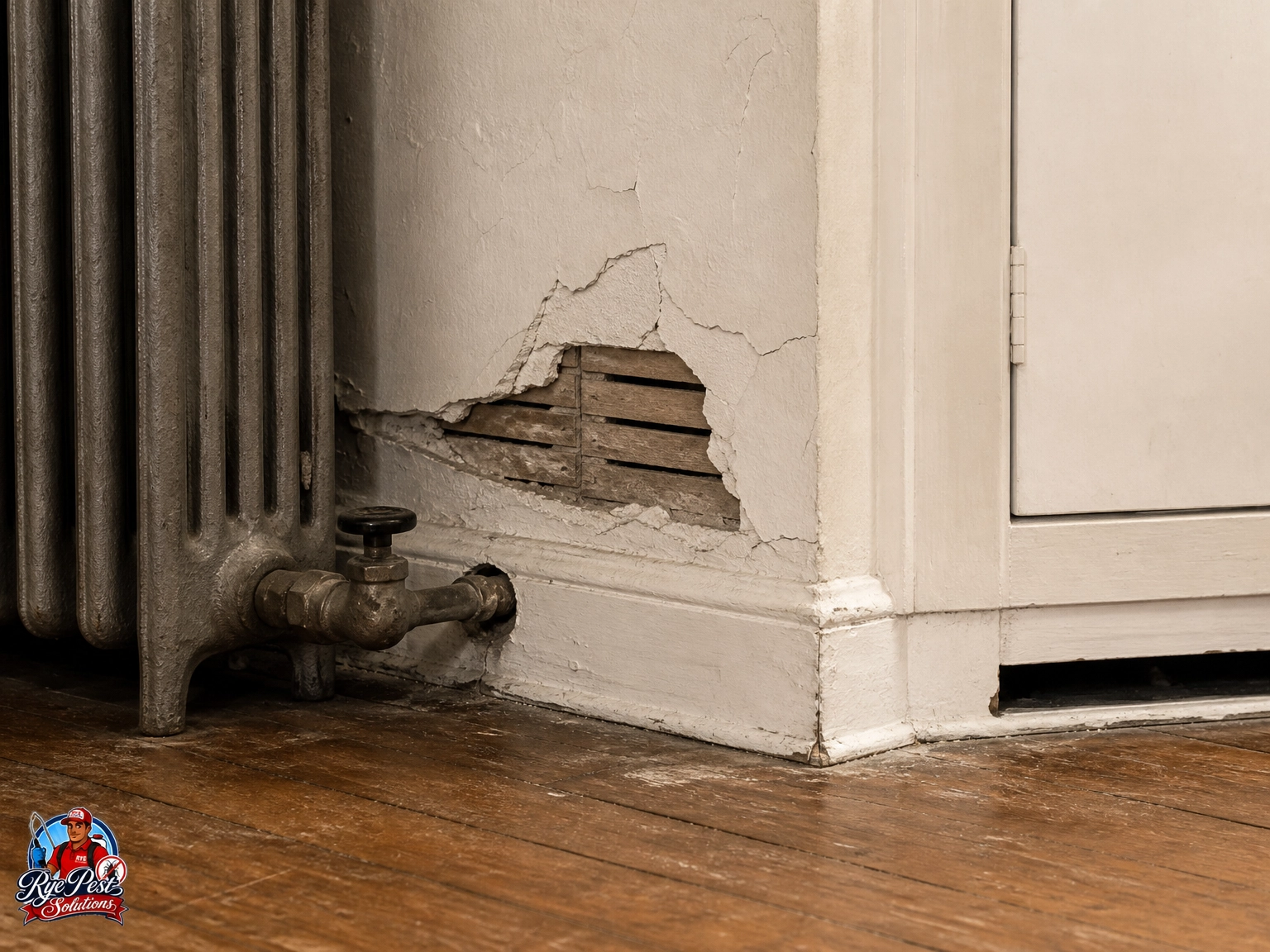
Pre-war construction, roughly the 1900s through the 1940s, predates modern sealing standards. Builders laid plaster over wood lath, ran cast-iron radiator risers through floors and walls, and fitted site-built cabinets with gaps nobody was sealing for rodents.
Traps remove the mice you have; exclusion keeps the next generation from moving in. Rye Pest Solutions takes that position deliberately, and why traps alone fail shows what it looks like in practice. City guidance treats cracks, holes in walls or floors, and leaks as reportable conditions, with 311 as the fallback when repairs stall.
New York adds a second problem. Rows of attached buildings share wall cavities, pipe chases, and basements, so one open gap can connect your kitchen to a neighbor's unit or the trash room downstairs.
Expect a methodical job, not one Saturday afternoon. Work room by room, then revisit after plumbing repairs or renovation. The walkthrough below covers where mice get in, which materials survive old plaster and pipe movement, and what renters can handle versus what landlords should authorize.
Before You Start: Tools, Safety, and Realistic Scope
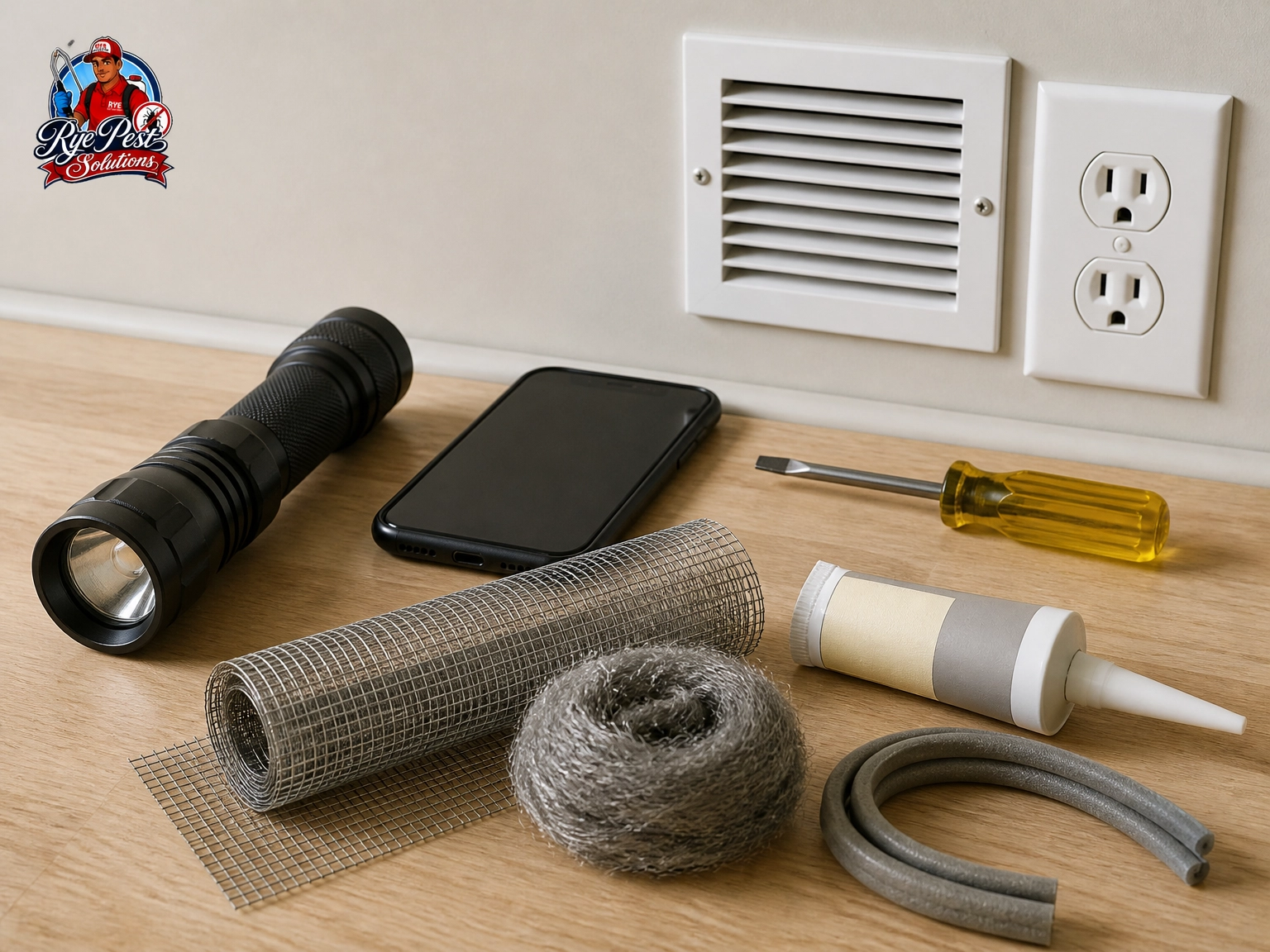
Gather the basics before you start: flashlight, small mirror or phone camera for voids, copper or stainless steel mesh, steel wool, surface-matched sealant, backer rod for deep gaps, and a screwdriver for outlet covers and vent grilles. Safety boundaries come first. Never seal vents, flues, or clearances around gas appliances, and do not pack anything tight against radiator valves or supply lines. Confirm with your superintendent or a licensed professional before filling gaps near utilities.
Know the scope split. Renters can caulk baseboards, seal cabinet seams, and screen under-cabinet voids. Opening walls, altering plumbing, or drilling into a party wall needs landlord authorization. Under Local Law 55, owners of buildings with three or more units must fix conditions that cause pests, so structural sealing is generally their job (HPD guidance).
Inspect low and behind things. Mice follow edges and pipes, so start at the floor-to-wall junction in each room. Photograph and date everything you find and seal. Those records support repair requests and help you spot reopened points after heating season.
Room by Room: A Walkthrough of Where Mice Get In
Inspect in the order mice travel: kitchens first, where food and water reward them, then bathrooms, then bedrooms and living rooms, then shared corridors and closets. That sequence is field observation, not settled fact, yet it holds in nearly every pre-war unit our technicians walk.
Each stop names the gaps most common in these buildings, then the sealing approach that suits that surface and structure. Where a point comes from published rodent-control guidance, it is credited to the source; everything else reflects what we see in the field, and we label it that way.
Treat the list as a repeatable checklist you can hand to a handyman, a landlord, or a licensed pest professional. Unsure what you're seeing? Our guide to telling field mice from house mice helps, and our rodent prevention articles go deeper.
Kitchen: Under-Cabinet Voids and Pipe Penetrations
The kitchen is the logical first stop, since food, water, and warmth concentrate here along with some of the widest gaps in the apartment. Inside base cabinets, the seam where the box meets the wall often sits open behind the drawer line, and the void behind the toe kick gives mice a covered runway from one end of the room to the other. Caulk that seam, then screen the toe kick opening with copper or stainless mesh, keeping shutoff valves reachable.
The cutouts around supply lines and drain pipes in the cabinet floor and back panel let mice move between units. Pack them with copper mesh first, then seal whatever gap remains. Pull the stove and refrigerator out once and check the wall seam plus the gas and water line penetrations; city rodent guidance calls out openings larger than a quarter inch, including utility entries, as points to seal.
Old plaster is rarely straight, so a seam that looks closed from the front may be wide open at a back corner. Run your hand along it. Then clean: hard-sided containers for dry goods, no dripping faucets, and a wiped crumb line behind the counter. Sealing without that sanitation step just reroutes mice into the next room.
Bathroom: Vanity Gaps, Pipe Chases, and Tile Seams
Kitchens draw attention, but bathrooms combine water, pipes, and old tile into easy access.
Under the vanity or pedestal sink, the open space connects straight into the wall cavity. Seal around supply lines and the drain pipe with copper mesh and sealant, then close the back panel where the design allows.
Vertical pipe chases are a different matter. The shafts carrying water and waste lines between floors act as highways for mice in pre-war buildings, and sealing them falls under rodentproofing provisions in the building code plus an owner's authorization. Report those gaps instead of filling them yourself.
Cracked grout and missing caulk at the tub base, behind the toilet, or where tile meets plaster open into the wall behind.
Test every drain and register in the room; an intact cover is a barrier, and a broken one is an open door from the line below.
Moisture keeps them coming back. A slow leak under the sink will draw mice regardless of how well the seams are sealed.
Bedroom and living room radiator gaps and baseboards come next.
Bedroom and Living Room: Radiator Pipes, Baseboards, and Plaster
Bedrooms and living rooms hold fewer water sources than bathrooms, but just as many openings. Start at the radiator: the ring-shaped gap where a steam or hot-water riser passes through the floor or wall is among the most common entry points in pre-war apartments. Seal it without pinching the riser or covering the valve.
Then run a caulk line along the baseboard-to-plaster seam, corners and behind furniture included, and check the same seam on the opposite face of that wall. Hairline cracks in plaster over lath widen with building movement and humidity swings. Repair those structurally, since they also point to moisture behind the surface.
A loose switch plate or missing outlet box opens straight into the cavity. Fit gaskets or seal the perimeter, never the outlet itself. Radiator enclosures and through-wall A/C sleeves are seasonal doors, often left open from October through May once the unit's frame stays in the window.
Check bedding and upholstery while you are in here, too, since bed bug treatment costs rise when activity goes unnoticed for weeks.
Hallways, Closets, and Renovation Seams
The same gaps continue into the spaces you pass through but rarely inspect. Where a renovation replaced drywall, tile, or cabinetry beside original plaster, that junction is often left unsealed because each trade assumed the next would finish it. Closets hide similar openings: the space between the closet floor and the wall, plus the rough holes cut for shelving and hanger rods, lead straight into the cavity behind.
Shared and party walls are a separate problem. Gaps at outlets, cable and internet penetrations, and old intercom or buzzer wiring open into neighboring units, and no single tenant can close those alone.
Mice also travel upward from below. Pipes rising from basements and trash areas give them a route, so sealing one apartment slows activity but rarely ends it while the source downstairs stays open. Report these building-level gaps to your landlord or superintendent in writing.
Finally, check the door. Entry and service doors with daylight showing underneath are worth a door sweep, though in most pre-war buildings that is a landlord or building item, not a tenant repair.
Sealing Materials That Hold Up in Pre-War Construction
Knowing where the openings are is half the job. The other half is choosing material that survives old plaster, pipe movement, and decades of settling. Federal and city rodent-control resources stress sealing as a core exclusion step; the material specifics below reflect what Rye Pest Solutions technicians use in the field.
Steel wool stops gnawing in small gaps and costs little, but it rusts in damp areas and gets pushed aside when loosely packed. Treat it as a filler behind a harder barrier, not as the only layer.
For larger openings around pipes, copper or stainless steel mesh is the durable option. It resists chewing and stays put; plastic and fiber mesh do not.
Match sealants to the surface: paintable latex on plaster, silicone or a wet-area product in bathrooms. Fill deep gaps with backer rod first so the sealant cures correctly.
Cementitious or mortar fill suits masonry gaps and larger holes through plaster and lath, but it is wrong against pipes that move or spots you may need to service later.
Spray foam used alone, tape, cardboard, and plastic bags tend to fail. Foam is chewable, and tape does not survive the temperature and humidity swings typical of pre-war buildings.
Good materials keep sealed gaps sealed; they do not remove mice already inside.
Why Exclusion Alone Is Not Enough
Exclusion keeps new mice out. The mice already nesting inside your walls keep breeding, so you still need trapping and professional treatment to reduce the population you have. The strategy is exclusion plus control, not exclusion instead of control. Our guide to mouse habits and warning signs explains what to watch for.
Sanitation carries the same weight. Store dry goods in hard-sided containers, take trash out nightly, fix dripping faucets, and clean behind appliances. A perfectly sealed apartment with an open food source still supports mice.
Sealant and caulk fail. Recheck radiator pipe gaps, under-sink openings, and baseboard seams after heating season, after plumbing work, and after every renovation.
Monitor with snap traps or glue boards along walls and behind appliances. Consistent catches mean you missed an entry point or a neighboring unit is still open.
Think at the building level. In attached pre-war buildings, exclusion works best when neighboring units, basements, and trash rooms are sealed on the same schedule.
Renters and Landlords: Who Handles What
Sealing work has a division of labor, and knowing yours keeps it moving.
Renters can usually handle cosmetic, non-structural sealing: caulking baseboard seams, sealing cabinet joints, screening under-cabinet voids. Report conditions to your landlord in writing, with photos and dates.
Structural work is different. Opening walls, sealing pipe chases between floors, and treating common areas generally fall to the building owner. Check your lease and building rules before assuming.
Tenants can report rodent activity and other housing conditions through NYC 311; HPD handles housing maintenance complaints. Document your contact with the landlord.
Landlords and property managers should treat exclusion as recurring maintenance, not a one-time repair, and keep a per-unit record of what was sealed and when. For a building-wide plan, rodent control services in NYC can help.
The NYC Rent Guidelines Board FAQ addresses tenant questions about mice and landlord extermination duties, but the page states it is not a substitute for the statutes, codes, and regulations. Rely on official sources, not an FAQ summary.
Closing the Gaps That Keep Bringing Mice Back
Consistency is what makes that division of labor work. Mice in a pre-war apartment are a gap problem before they are a trap problem. Seal radiator pipe openings, baseboard seams, under-cabinet voids, and renovation junctions room by room, then recheck them after every heating season.
Pair sealing with sanitation and monitoring, and push for building-level fixes on shared walls, pipe chases, and basements. That combination, not a box of traps, stops the cycle.
If mice keep appearing after the obvious gaps are closed, the entry point may sit behind a wall, in a neighboring unit, or a common area. Rye Pest Solutions is family-owned and MBE-certified, offering rodent inspection, treatment, and preventative maintenance for renters, landlords, and property managers across the five boroughs and Westchester County, including rodent control in Manhattan. Schedule an inspection and get a sealing and prevention plan built around your building, not a generic checklist.
Conclusion
Mice in pre-war NYC apartments are usually a gap problem, not just a trap problem. The biggest lessons are to seal room by room, focus on radiator pipes, baseboards, under-cabinet voids, and renovation seams, and recheck those spots after every heating season. Sealing works best when paired with sanitation, monitoring, and building-level fixes on shared walls, pipe chases, and basements. Renters and landlords should also keep clear records of what was sealed and when, so responsibility and follow-up stay consistent. If mice keep appearing after obvious gaps are closed, the next step is an inspection from Rye Pest Solutions. This family-owned, MBE-certified company offers rodent inspection, treatment, and preventative maintenance for renters, landlords, and property managers across the five boroughs and Westchester County, including Manhattan. Schedule an inspection and get a sealing and prevention plan built around your building, not a generic checklist.